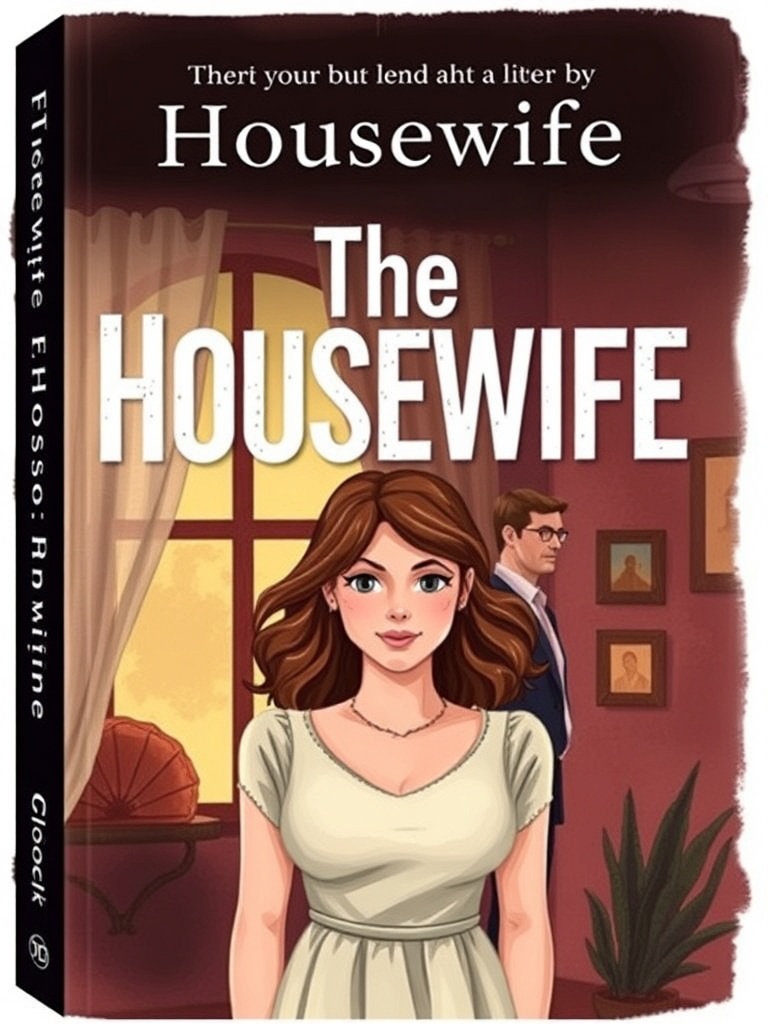
Story overview
The Housewife.
0
0
20
published
A seemingly normal woman. Happy. Healthy. Honest. Disappears. Deceptions arrise. Death is common. Who is Delilah?
Table of contents
- 5/30/2026
Ch. 1: The Gilded CageFree
Chapter 1: The Gilded Cage. Scene 1: Morning routine. Delilah, the radiant housewife, orchestrates a perfect morning. Sunlight streams into the immaculate kitchen of her suburban home. She prepares Arthur's breakfast with practiced efficiency, her movements fluid and graceful. The house is a testament to her meticulousness: not a speck of dust, not a misplaced item. Everything is in its designated place. Arthur enters, drowsy but smiling, and their interaction is picture-perfect – a loving peck on the cheek, a murmured "Have a good day, darling." The dialogue is light, affectionate, reinforcing their idyllic marriage. Arthur leaves for his work, a successful architect, and Delilah waves from the porch, her smile unwavering. Scene 2: Midday activities. Delilah tends to her garden, the vibrant roses reflecting her own supposed beauty. Her movements are almost too precise, lacking the natural messiness of everyday life. She receives a call from her sister, Sarah, discussing mundane family matters. Sarah's tone is warm, but Delilah's responses are brief, almost detached, hinting at a subtle distance. She then engages in a brief, polite conversation with Mrs. Gable, the next-door neighbor, who compliments her on her immaculate lawn. Delilah's responses are gracious but also guarded, never revealing too much personal information. Mrs. Gable notes Delilah's almost rehearsed pleasantries. Scene 3: Afternoon reflection. Alone in the house, the perfect facade momentarily cracks. Delilah sits by the window, her gaze distant. A faint tremor runs through her hand as she reaches for a teacup. Her expression shifts from serene to something harder, more calculating, as she looks at a framed photo of herself and Arthur. She opens a small, antique jewelry box, revealing not jewelry, but a collection of meticulously organized documents and a single, worn photograph of a different man. A flicker of intense emotion crosses her face – regret, perhaps, or a deep-seated pain. She quickly closes the box, her composure returning. The scene emphasizes the manufactured nature of her happiness, the carefully constructed persona she presents to the world. The house, though beautiful, feels more like a stage set than a home. Continuity notes: Establish Delilah's character as the perfect housewife; hint at the artificiality of her life; introduce the concept of a hidden past without revealing specifics; Arthur's immediate departure sets up his absence during the initial discovery of the disappearance. Emotional turns: The initial warmth and serenity of Delilah's life contrasted with a subtle undercurrent of controlled emotion and hidden depths. The final moments in solitude reveal a glimpse of the woman beneath the mask. Ending hook: Delilah gazes out the window, a profound sadness in her eyes, before snapping back to her perfect persona, leaving the audience wondering what lies beneath the surface of her seemingly flawless existence.
- 5/30/2026
Ch. 2: A Vanishing Act In app
Chapter 2: A Vanishing Act. Scene 1: Arthur's return. Arthur arrives home from work, expecting the usual warm welcome. The house is quiet, eerily so. He calls out for Delilah, but there's no response. He checks the usual places – the kitchen, the living room, their bedroom. Her car, a sleek, dark sedan, is parked in the garage. Her purse, with her wallet and keys, is on the hall table. Her phone is on the charger in the bedroom. There are no signs of forced entry, no struggle. It’s as if she simply ceased to exist within the confines of their home. The pristine order of the house now feels unsettling, a stark contrast to the chaos brewing within Arthur. He begins to panic, his earlier contentment replaced by a gnawing dread. The perfect dinner Delilah might have been preparing is nowhere in sight, the kitchen untouched since morning. Scene 2: The frantic search. Arthur searches the house more thoroughly, his movements becoming increasingly frantic. He checks the closets, the attic, the basement, calling her name repeatedly. He looks out into the backyard, the manicured lawn now appearing vast and empty. He finds a half-finished book on the bedside table, a bookmark placed where she left off, reinforcing the suddenness of her departure. He tries calling her cell phone, but it rings unanswered from the charger. He calls her sister, Sarah, who is equally bewildered and concerned. Sarah confirms Delilah had no plans to go anywhere, no reason to leave. Scene 3: The police report. Overwhelmed and distraught, Arthur finally calls the police. Detective Miller is assigned to the case. Arthur, visibly shaken, recounts the events of the day, emphasizing Delilah's routine, her unwavering presence in his life, and the complete lack of any explanation for her vanishing. He paints a picture of a devoted wife, a woman who would never leave him. His grief seems genuine, but his narrative is almost too perfect, too rehearsed, as if he’s trying to convince himself as much as the detective. He stresses the undisturbed nature of the house and the presence of her belongings, highlighting the sheer impossibility of her disappearance. He describes Delilah as the anchor of his life, the source of his happiness, making her absence a devastating blow. The police begin their initial sweep of the property, documenting the scene and interviewing Arthur. The community, upon hearing the news, is thrown into a state of shock and disbelief. Mrs. Gable, the neighbor, is interviewed and expresses her utter astonishment, recounting how Delilah was just talking to her that morning. Continuity notes: Clearly establish Delilah's disappearance and the lack of any obvious clues; introduce Detective Miller and Arthur's initial interaction; emphasize the 'perfect' state of the house and the presence of Delilah's belongings; set the stage for the investigation and the community's reaction. Emotional turns: Arthur's shift from contented husband to panicked, distraught man; the unsettling realization of an impossible disappearance; the community's shock and disbelief. Ending hook: Detective Miller surveys the immaculate, yet empty, home, a sense of unease settling upon her. The absence of any struggle or forced entry makes this more than a typical missing person case; it feels deliberate, orchestrated, and deeply unsettling.
- 5/30/2026
Ch. 3: The First Cracks In app
Chapter 3: The First Cracks. Scene 1: Miller's initial assessment. Detective Miller arrives at the seemingly idyllic suburban residence. Her experienced eyes, accustomed to the chaos of crime scenes, immediately note the almost unnatural tidiness of the house. It’s not just clean; it's sterile. There's a distinct lack of personal clutter – no stray mail on the counter, no children's toys scattered across the floor (though they have no children), no personal mementos out of place besides those deliberately displayed. This perfection, in Miller’s experience, often masks something. She walks through the house, her gaze lingering on details: the perfectly aligned books on the shelves, the spotless kitchen appliances, the absence of any personal 'lived-in' feel. She notes the photographs of Delilah and Arthur, always smiling, always posed. Miller asks Arthur to walk her through the house again, observing his reactions. His grief seems genuine, but there's a performative quality to it, a well-rehearsed sorrow that strikes her as slightly off. He answers her questions with a practiced earnestness, but his eyes dart around, as if searching for something or avoiding something. Scene 2: Questioning Arthur. Miller conducts a more formal interview with Arthur in the living room. She probes for details about Delilah's routines, her friends, any recent changes in her behavior, any conflicts or worries she might have had. Arthur insists Delilah was happy, content, and had no enemies. He describes her as the perfect wife, her life revolving around their home and him. When Miller presses about any disagreements, Arthur becomes defensive, downplaying any marital issues and insisting their relationship was flawless. He provides an alibi for the night of the disappearance: he claims he was working late at his office, alone. Miller notes his vagueness about the exact times and his inability to provide concrete proof beyond his word. She asks about their finances; Arthur admits they are comfortable but becomes evasive when asked about specific debts or investments. The sheer lack of any disarray in the house, coupled with Arthur's slightly too-perfect narrative and his evasiveness on certain points, begins to sow seeds of suspicion in Miller’s mind. She finds the absence of any personal touch in the house particularly jarring – it’s more like a show home than a place where someone lives and breathes. Scene 3: The subtle inconsistencies. Miller re-examines Delilah’s belongings. She finds a meticulously organized closet, with clothes arranged by color and season, again emphasizing the controlled nature of Delilah's life. She finds a small, locked diary, which Arthur claims he’s never seen. Miller requests a warrant to open it, suspecting it might hold the key. She observes Arthur’s interaction with the police officers; he's polite, cooperative, but his attention seems divided, his gaze often drifting towards the windows or the front door. The overwhelming sense of order and the husband's somewhat rehearsed grief are the first significant cracks in the facade of the perfect suburban tragedy. Miller makes a note to delve deeper into Arthur’s background and Delilah’s past, which seems strangely absent from any official records. Continuity notes: Introduce Detective Miller's sharp observational skills and early suspicions about Arthur; highlight the unsettling perfection of the house; reveal Arthur's inconsistencies and evasiveness; establish the missing diary as a potential clue. Emotional turns: Miller's growing skepticism; Arthur's defensiveness; the unsettling feeling of a staged reality. Ending hook: As Miller leaves the house, she glances back at the perfectly manicured lawn and the pristine windows, a chill running down her spine. The absence of chaos feels like a deliberate void, and Arthur's grief, while seemingly real, feels like a performance. Miller is convinced that the truth of Delilah’s disappearance lies not in a struggle, but in the deliberate absence of one, and that Arthur knows more than he's letting on.
- 5/30/2026
Ch. 4: Whispers Next Door In app
Chapter 4: Whispers Next Door. Scene 1: The Neighbor's Observation. Detective Miller, seeking any peripheral details, interviews Mrs. Gable, the next-door neighbor. Mrs. Gable is a quintessential busybody, her eyes constantly scanning the street from behind her lace curtains. She initially expresses shock and sadness over Delilah's disappearance, praising her as a "lovely, quiet woman." However, as Miller gently probes for any unusual occurrences, Mrs. Gable's demeanor shifts. She becomes more animated, recalling details she had previously dismissed as insignificant. She mentions seeing a dark, unfamiliar car parked down the street late at night several times in the weeks leading up to Delilah's vanishing. She also recalls hearing raised voices, hushed arguments, from the Vance residence on a few occasions, late at night, an unusual occurrence given the couple's typically quiet demeanor. She emphasizes that she couldn't make out the words, and initially assumed it was just a typical marital spat, but now, in retrospect, it feels ominous. She describes the voices as tense, one distinctly Delilah’s, the other a deeper, unfamiliar male voice. Scene 2: The Late-Night Visitors. Mrs. Gable provides a description of the unfamiliar car – a dark, nondescript sedan, not the kind of vehicle usually seen in their upscale neighborhood. She recalls seeing different men coming and going from the house at odd hours, not Arthur, but others. She describes one man in particular, tall, with dark hair, who seemed to have a tense, almost hostile interaction with Delilah on one occasion when she briefly stepped out to retrieve mail. Mrs. Gable admits she didn't think much of it at the time, assuming they were acquaintances or perhaps delivery people, but the frequency and the furtive nature of these visits now strike her as peculiar. She also mentions seeing Delilah once, a few months prior, looking unusually distressed, standing on the porch late at night, staring into the darkness as if waiting for someone. Mrs. Gable’s narrative is filled with neighborhood gossip and personal interpretations, but Miller carefully sifts through the noise, looking for verifiable facts. The neighbor’s keen observation, though fueled by curiosity, provides Miller with crucial new leads. Mrs. Gable's description of the late-night visitors and the hushed arguments contradicts Arthur’s narrative of a perfectly harmonious and uneventful life. Scene 3: The Unsettling Details. Miller asks Mrs. Gable about Delilah's social circle. Mrs. Gable reveals that Delilah didn't seem to have many close friends in the neighborhood, rarely attending local gatherings, and mostly kept to herself, which she found a bit unusual for a woman who seemed so dedicated to her home. She mentions that Delilah sometimes received packages that looked like they contained unusual items, not typical household goods or fashion accessories. Mrs. Gable’s fragmented recollections, while potentially exaggerated by her gossipy nature, offer a stark contrast to the pristine image Arthur presented. The ‘perfect’ housewife was apparently having late-night arguments, receiving clandestine visitors, and exhibiting signs of distress, all while maintaining an impeccable facade during the day. Miller takes notes on the descriptions of the car and the men, realizing these leads need to be pursued immediately. The neighbor’s testimony begins to paint a picture of Delilah not as a passive victim, but as someone with a complex, possibly dangerous, life outside the confines of her perfect home. Continuity notes: Gather new information about potential clandestine activities involving Delilah; provide concrete descriptions of unfamiliar visitors and vehicles; establish that Delilah was not as isolated or content as Arthur claimed; introduce the idea of a hidden life. Emotional turns: Mrs. Gable’s shift from neighborly concern to revealing potentially incriminating details; Miller’s growing suspicion that Delilah’s disappearance is linked to a hidden, possibly illicit, life; the unsettling implication that Arthur may have been deliberately misleading the investigation. Ending hook: Mrs. Gable, wiping her hands on her apron, sighs and says, “She was always so put together, Detective. Almost too perfect. Like a doll. Sometimes, I’d see her looking out at night, and it was like she was seeing something else entirely, something… frightening. I just wish I’d paid more attention.” Miller thanks her, but her mind is already racing, realizing that the ‘perfect housewife’ might have been living a double life, and the late-night visitors could be directly connected to her vanishing.
- 5/30/2026
Ch. 5: Echoes of the Past In app
Chapter 5: Echoes of the Past. Scene 1: The Digital Ghost. Detective Miller, faced with the lack of concrete evidence at the house, turns her attention to Delilah's digital footprint. To her surprise, it's virtually nonexistent. There are no active social media profiles, no public records of online activity beyond basic utility bills and property records tied to the house. Her email accounts, when accessed via a warrant, reveal a sparse, professional communication style, devoid of personal correspondence. There are no photos, no blogs, no online interactions that would offer insight into her personality, her friends, or her interests beyond the domestic sphere. It’s as if Delilah Vance, the woman who lived in this house, was a digital phantom, deliberately erasing any trace of her existence prior to her marriage to Arthur. Miller finds this extreme lack of an online presence highly suspicious in the age of ubiquitous connectivity. It suggests a conscious and meticulous effort to remain anonymous, or to create a new identity. She cross-references the name 'Delilah Vance' with various databases – professional licenses, past addresses, previous marriages, criminal records. The results are consistently clean, almost too clean. There are no records of her attending college, no previous employment history, no family outside of her sister Sarah, whose information seems straightforward. It's as if Delilah Vance simply materialized into existence a few years prior, coinciding with her marriage to Arthur. Scene 2: The Phantom Identity. Miller contacts Delilah's sister, Sarah, again, pushing for more information about their family history, upbringing, and any past relationships Delilah might have had. Sarah, while cooperative, seems genuinely unable to provide details that would explain Delilah's hidden past. She speaks of a relatively normal childhood, but admits Delilah was always a private person, and they lost touch for several years before Delilah met Arthur. Sarah reveals that Delilah never spoke much about her life before meeting Arthur, and when asked, would often change the subject or offer vague, unconvincing anecdotes. This lack of shared history or verifiable background information deepens Miller's suspicion. The meticulous deletion of her past suggests Delilah was running from something, or someone. The 'perfect wife' persona might be a deliberate construction, a shield for a life she desperately wanted to leave behind. Miller begins to suspect that 'Delilah Vance' might not be her real name. She initiates a broader search, looking for missing persons reports or unidentified individuals with similar physical descriptions in neighboring states and even national databases, focusing on the time frame before Delilah would have met Arthur. Scene 3: The Unsettling Blank Slate. The investigation into Delilah's background yields nothing but a void. There are no childhood friends, no university records, no past romantic partners, no professional references. It’s as if she dropped into Arthur’s life from thin air. Miller’s professional instinct screams that this is not normal. People leave trails, even if they try to hide them. The sheer absence of any digital or paper trail is more damning than a history of minor indiscretions. It speaks of extreme caution, planning, and a motive powerful enough to necessitate the complete erasure of one's identity. Miller feels a growing sense of unease; this isn't a simple case of a runaway wife. The meticulously crafted persona and the erased past suggest a deeper, more dangerous narrative. She requests access to Arthur's personal records and Delilah’s financial transactions prior to their marriage, hoping to find a financial breadcrumb that might lead to her previous life. Continuity notes: Highlight the complete lack of Delilah's digital and personal history; introduce the possibility that 'Delilah Vance' is an alias; strengthen the suspicion that Delilah has a hidden past she is actively concealing; reinforce the idea that her disappearance is not a simple missing person case. Emotional turns: Miller's growing frustration and suspicion; Sarah's inability to provide substantive answers, adding to the mystery; the unsettling realization of a person deliberately trying to be a ghost. Ending hook: Miller stares at the blank computer screen, the absence of data a deafening silence. "Who *are* you, Delilah?" she mutters, the question hanging heavy in the air. The lack of a past is the loudest clue she has, and it points towards a deliberate, calculated act of disappearing, not a spontaneous one. The perfect wife is a carefully constructed lie, and Miller is determined to find the architect of that lie, and the truth it was built to conceal.
- 5/30/2026
Ch. 6: Arthur's Unease In app
Chapter 6: Arthur's Unease. Scene 1: The Alibi Crumbles. Detective Miller returns to Arthur Vance’s home for a follow-up interview, focusing on his alibi for the night of Delilah's disappearance. Arthur had stated he was working late at his architectural firm, alone. When Miller requests security footage from his office building and access logs, Arthur becomes visibly nervous. He claims the security system was undergoing maintenance that night, and his access card malfunctioned, forcing him to leave through a service exit without logging his departure. This explanation is too convenient, too perfectly tailored to circumvent electronic verification. Miller notes his fidgeting, the slight tremor in his hands, and the way his eyes avoid direct contact. She presses him for details about what specific work he was doing, and he struggles to recall specific project details, offering vague descriptions of blueprints and client meetings. His financial records, obtained through a warrant, reveal a significant amount of personal debt and recent large withdrawals from their joint savings account, contradicting his earlier assertion of comfortable finances. These withdrawals occurred shortly before Delilah’s disappearance. Miller suspects Arthur might have had a motive beyond a distraught husband: financial desperation, or perhaps a desire to fund Delilah's departure, or even to cover up something more sinister. Scene 2: Inconsistencies and Financial Strain. Miller confronts Arthur with the discrepancies in his story and his financial situation. He admits to some financial difficulties, blaming a few recent business setbacks and unexpected expenses. He claims the large withdrawals were for a planned, albeit secret, renovation project for their home, something he wanted to surprise Delilah with. This explanation feels flimsy, especially given Delilah’s meticulous planning and aversion to surprises, as hinted by Mrs. Gable. When asked why he didn't mention the financial strain or the renovation plans earlier, Arthur claims he didn't want to worry Delilah. His demeanor shifts from grief-stricken husband to a man cornered, his answers becoming more clipped and defensive. He insists he loved Delilah deeply and would never harm her, but his insistence feels less like a declaration of innocence and more like a desperate attempt to control the narrative. Miller observes the subtle signs of stress: a slight pallor, a tendency to clear his throat frequently, and a restless energy. He is no longer just a grieving husband; he is becoming a person of interest. Scene 3: A Possibility of Complicity. Miller considers the possibility that Arthur wasn't just uninformed about Delilah's disappearance, but potentially complicit. Could he have helped her disappear? Did they orchestrate it together? Or was he involved in something darker, something that led to her vanishing against her will? The financial irregularities suggest a potential motive for either scenario. If Delilah was planning to leave, perhaps Arthur was trying to buy her silence or facilitate her escape, hence the withdrawals. Or, perhaps, Arthur’s own secrets were catching up with him, and Delilah was a liability. The lack of any struggle in the house could indicate that Delilah left willingly, perhaps with Arthur's knowledge or even assistance. The pristine state of the house now seems less like a sign of Delilah's meticulous nature and more like a deliberate staging. Miller decides to dig deeper into Arthur's business dealings and any potential enemies he might have, while also continuing her search for Delilah's true identity. The husband's carefully constructed facade is beginning to crack, revealing a man under immense pressure, hiding secrets of his own. Continuity notes: Undermine Arthur's alibi; reveal significant financial irregularities and large withdrawals by Arthur; increase Arthur's suspect status; explore the possibility of Arthur's complicity in Delilah's disappearance; hint at Arthur's own hidden secrets and potential motives. Emotional turns: Arthur’s increasing nervousness and defensiveness; Miller’s growing suspicion and professional assessment of Arthur as a key figure, not just a victim; the shift in the investigation from a missing person case to a potential crime involving Arthur. Ending hook: Miller leaves Arthur’s house, the scent of expensive cologne and desperation clinging to the air. Arthur’s story about the renovation and the faulty security system felt like a poorly rehearsed play. The financial records, however, were starkly real. Miller can’t shake the feeling that Arthur is drowning in secrets, and Delilah’s disappearance might be a ripple effect of his own carefully constructed lies, or perhaps something far more directly connected to him. The question is no longer just where Delilah is, but what role Arthur played in her vanishing.
- 5/30/2026
Ch. 7: The Cryptic Note In app
Chapter 7: The Cryptic Note. Scene 1: A Hidden Discovery. While meticulously cataloging Delilah's personal effects, Detective Miller returns to the house at Arthur’s reluctant invitation, ostensibly to look for anything she might have forgotten. Miller, driven by her intuition that Delilah was more than she appeared, focuses on Delilah’s personal library. She runs her gloved hand along the spines of her meticulously arranged books, looking for anything out of place. Tucked away within a first edition of "The Secret Garden," a book Delilah reportedly cherished, Miller discovers a small, folded piece of paper. It’s not a bookmark; it’s an intentional hiding place. The paper contains a series of seemingly random letters and numbers, arranged in short lines: 'X7-B3-P1-K9 Q4-R2-M5-S8'. It’s clearly a code, a cipher. Miller recognizes the deliberate formatting, the careful placement within a beloved book, as a sign that this was meant to be found, perhaps by someone specific, or as a trail marker. Scene 2: Deciphering the Code. Miller brings the note back to the precinct, her pulse quickening. She believes this is the first concrete breadcrumb Delilah left behind, a deliberate message intended to communicate something vital. She enlists the help of the department's cryptography expert, a quiet, unassuming analyst named Dr. Evans. They try various common ciphers – Caesar, Vigenère, substitution. The format suggests a grid or a keyword-based cipher. The numbers and letters could represent coordinates on a grid, or positions within a phrase. Dr. Evans works tirelessly, cross-referencing the sequence with common literary devices and known codes. Miller, meanwhile, researches "The Secret Garden" for any thematic connections or hidden meanings. She considers the book’s themes of discovery, hidden worlds, and the transformation of a neglected space. Could the code relate to a location, a person, or a specific event? The note feels personal, intimate, suggesting Delilah was communicating with someone she trusted, or leaving a message for herself to find later, a contingency plan. Scene 3: A Glimmer of Meaning. After hours of intense analysis, Dr. Evans has a breakthrough. The pattern 'X7-B3-P1-K9 Q4-R2-M5-S8' resembles a specific type of book cipher, where letters are indicated by a number corresponding to a page, line, and word. However, without the key text (which would be the book itself, or another specific text), it’s difficult to decipher definitively. Miller realizes the key text is likely "The Secret Garden," given its placement. They begin to apply the potential cipher to the text of the book. The first sequence, 'X7-B3-P1-K9', when applied to "The Secret Garden" (using a specific edition’s pagination and line breaks), yields a sequence of letters that, when rearranged, form a word: 'ESCAPE'. The second sequence, 'Q4-R2-M5-S8', yields another word: 'DANGER'. The note is a warning: 'ESCAPE DANGER'. This confirms Miller’s growing suspicion that Delilah was not a victim of random circumstances, but was actively trying to flee something or someone, and that her disappearance was a calculated act of self-preservation. The note is a message from Delilah, a cry for help or a final instruction, hidden in plain sight. Continuity notes: Introduce a crucial clue left by Delilah; establish the cryptic note as a deliberate message; confirm the message is a warning ('ESCAPE DANGER'); deepen the mystery surrounding Delilah's past and her motives for disappearing; Miller’s analytical skills are highlighted. Emotional turns: Miller’s excitement and renewed determination upon finding the note; the intellectual challenge and suspense of deciphering the code; the chilling realization that Delilah was in grave danger. Ending hook: The deciphered words, 'ESCAPE DANGER,' hang in the air, a stark confirmation of Delilah’s fear. Miller looks at the note, then at Arthur, who remains oblivious to this crucial piece of evidence. Who was Delilah trying to escape from? Was it Arthur? Or someone from her hidden past? The note is a lifeline, but it also deepens the chasm of the unknown, suggesting that Delilah’s vanishing act was a desperate flight from a very real and present threat.
- 5/30/2026
Ch. 8: A Shadow Emerges In app
Chapter 8: A Shadow Emerges. Scene 1: Cross-Referencing Cold Cases. The deciphered note, 'ESCAPE DANGER,' fuels Detective Miller's suspicion that Delilah's disappearance is linked to a larger, more sinister pattern. She expands her investigation, looking beyond local incidents. She begins cross-referencing Delilah's physical description and age range with unsolved cases of disappearances and suspicious deaths across the country, particularly those that occurred in the years leading up to Delilah's arrival in Arthur's life. Her search yields a disturbing pattern: several unsolved cases in different states, involving women who vanished without a trace, only for their bodies to be discovered weeks or months later, often in remote locations. The circumstances surrounding these deaths are eerily similar: no obvious signs of struggle at the initial scene, a lack of personal connections to the victims’ immediate surroundings, and a perplexing absence of clear motives. The victims often lived seemingly ordinary lives, much like Delilah. Scene 2: The MO and the Mask. Miller focuses on a particular set of unsolved cases from a few years prior in a neighboring state. The victims in these cases were all women who had recently changed their identities or moved to new towns, attempting to start fresh. The manner of their deaths was also consistent – subtle poisonings or staged accidents that mimicked natural causes, making them difficult to classify as homicides initially. The common thread was the victims' apparent effort to disappear from their past lives. This resonates strongly with Delilah’s own meticulously erased history. Miller starts to suspect that Delilah wasn't just running from a past; she was a predator who preyed on others who were also trying to escape their own histories, or perhaps she was a target of someone who hunted such individuals. The 'perfect housewife' persona now appears less like a shield and more like a camouflage. Delilah’s perfection might have been a tool, a way to blend in and observe, or perhaps a cover for a more dangerous profession or involvement. The cryptic note could be a message related to these past cases, a coded reference to people or events connected to her previous life. Scene 3: The Unsettling Connection. Miller requests files on the cold cases. She meticulously reviews the limited evidence, looking for any overlooked details. In one case, a victim owned a book with a similar thematic resonance to "The Secret Garden." In another, a witness mentioned seeing the victim arguing with a tall, dark-haired man – a description that vaguely matches Mrs. Gable’s recollection of one of Delilah’s late-night visitors. The resemblance is tenuous, but it’s enough to ignite Miller’s professional curiosity. She begins to suspect that Delilah Vance is not a new identity, but an old one, and that her disappearance is not an isolated incident, but the latest chapter in a string of carefully executed crimes. The shadow of a dangerous past is starting to emerge, and Miller believes Delilah is at the center of it, either as a victim or a perpetrator, or perhaps both. The investigation is no longer just about finding a missing woman; it's about uncovering a pattern of deceit and potential violence that stretches far beyond the suburban tranquility of Arthur Vance’s home. Continuity notes: Expand the scope of the investigation to include cold cases; identify a pattern of disappearances and suspicious deaths with similar characteristics; establish a potential link between Delilah and these past crimes; reinforce the idea of Delilah’s constructed identity and her potentially dangerous past; introduce the possibility of Delilah being a perpetrator or a victim within a larger criminal network. Emotional turns: Miller’s growing sense of dread and urgency; the chilling realization that Delilah’s case might be connected to a series of unsolved murders; the unsettling thought that the 'perfect' housewife might be a master manipulator or a target of extreme danger. Ending hook: Miller stares at the grainy photographs of the past victims, their faces hauntingly ordinary, their lives abruptly ended. "She’s not just missing," Miller murmurs, tracing the outline of one of the victim's faces. "She’s connected. And whatever she was running from, or whatever she was doing, it’s catching up." The shadow of Delilah’s past has finally emerged, and it casts a long, ominous darkness over her present.
- 5/30/2026
Ch. 9: The First Victim In app
Chapter 9: The First Victim. Scene 1: A Body Discovered. The investigation takes a grim turn when a local hiker stumbles upon a body in the dense woods on the outskirts of town. The victim is identified as Mark Jenkins, a middle-aged man with no apparent connection to Delilah or Arthur Vance. Jenkins was known locally as a quiet, unassuming accountant who kept to himself. His death is initially ruled as accidental – a fall from a steep embankment. However, Detective Miller, alerted to the discovery, insists on a full forensic examination, her instincts screaming that this is not a simple accident. She recalls Mrs. Gable’s mention of Delilah receiving unusual packages, and the possibility of Delilah being involved in something illicit. Scene 2: The Unnatural Cause. The autopsy report confirms Miller’s suspicions. While the fall caused the fatal injuries, the pathologist discovers trace amounts of a rare, fast-acting toxin in Jenkins’s system, a substance that would have incapacitated him, leading to his fall. The toxin is difficult to detect and leaves minimal traces, suggesting a sophisticated perpetrator. The cause of death is now officially classified as homicide. Miller is frustrated; Jenkins had no known enemies, no history of debt or dangerous associations, and no apparent link to the Vance household. His life was as unremarkable as Delilah's appeared to be. How does he fit into the puzzle? Miller revisits Delilah’s cryptic note: 'ESCAPE DANGER.' Could Jenkins have been someone Delilah knew from her past life? Was he a threat, or was he involved in the danger she was escaping? Scene 3: The Obscure Clue. During the forensic sweep of the crime scene, a small, peculiar object is found lodged in the mud near where Jenkins’s body was discovered: a tarnished, antique silver locket, intricately engraved with a stylized raven. Miller recognizes the raven engraving. It’s a detail she’d noticed in one of the photographs on Delilah’s mantelpiece, specifically in a faded picture tucked away in a corner, a picture Arthur had dismissed as an old family photo, unremarkable. She asks Arthur about the locket and the photograph. Arthur claims he doesn’t recognize the locket and that the photograph is of Delilah’s distant relatives, whom he never met. His explanation is vague, and his discomfort is palpable. Miller realizes the locket is more than just a random piece of jewelry; it's a direct link, however obscure, to Delilah. The fact that it was found at the scene of the first confirmed murder in connection with the case, and that it matches a detail from Delilah's life, is too coincidental. The pattern is solidifying: Delilah's disappearance is somehow intrinsically linked to this murder, and the victim, Mark Jenkins, was not as unconnected as he initially seemed. The 'perfect wife' is now connected to a murder, and the cryptic note might be a key to understanding this victim's identity and role. Continuity notes: Introduce the first murder victim, Mark Jenkins; confirm his death is a homicide through the discovery of a rare toxin; establish a tenuous link between Jenkins and Delilah via the raven locket; Arthur's evasiveness regarding the locket and photograph raises further suspicion; solidify the connection between Delilah's disappearance and the murder. Emotional turns: The grim discovery of a body; Miller's growing unease and determination as the case turns violent; Arthur's visible discomfort and potential deception regarding the locket; the chilling realization that the victims are starting to appear in the immediate vicinity. Ending hook: Miller holds the tarnished raven locket, its cold metal a stark contrast to the warmth of the suburban dream she’s been investigating. "He wasn’t accidental, was he?" she says, her voice low. "And neither are you, Delilah." The raven, a symbol of secrets and omens, seems to mock her. The first victim is dead, linked by a cryptic clue to the missing woman, and Miller fears this is just the beginning of a deadly game where Delilah might be the puppet master or the ultimate prize.
- 5/30/2026
Ch. 10: Miller's Past In app
Chapter 10: Miller's Past. Scene 1: The Ghost of Cases Past. Detective Miller finds herself increasingly unsettled by the parallels between Delilah Vance's carefully constructed persona and a case from her early career – the notorious 'Silas Thorne' case. Silas Thorne was a charismatic con artist who meticulously crafted an identity as a philanthropic businessman, charming his way into the lives of wealthy individuals and institutions. He disappeared overnight, leaving behind a trail of ruined lives and empty bank accounts, but no physical evidence of foul play. Thorne was a master manipulator, adept at playing the role of the victim while orchestrating elaborate deceptions. Miller, a young detective at the time, became obsessed with Thorne's case, recognizing the chilling effectiveness of his facade. The case went cold, frustrating her immensely and leaving her with a lingering sense of professional failure and a deep-seated skepticism towards individuals who present an overly perfect, almost manufactured, image. Scene 2: The Echoes of Deception. As Miller delves deeper into Delilah's manufactured life, the similarities to Silas Thorne become unnerving. Both employed extreme measures to erase their pasts, both created seemingly flawless public personas, and both vanished without a clear explanation, leaving behind bewildered victims and a trail of financial and emotional wreckage. Miller’s past experience with Thorne has made her hyper-vigilant. She sees the subtle cues in Arthur's behavior – the performative grief, the evasiveness – as potential signs of manipulation, mirroring the reactions of Thorne’s victims who were initially blinded by his charm. She is particularly wary of Delilah’s lack of a digital footprint and her seemingly perfect domestic life, recognizing it as a potent form of camouflage. The raven locket found at Mark Jenkins's scene, and Arthur's denial, reminds Miller of Thorne’s ability to weave a web of deceit, making even the most obvious clues seem irrelevant or misattributed. Her past failure to catch Thorne has instilled in her a relentless drive to uncover the truth, especially when deception is involved. She sees Delilah not just as a missing person, but as a potential perpetrator or a victim of a similar high-level con. Scene 3: The Analyst's Doubt. Miller confides in her captain about the parallels with the Silas Thorne case, admitting that her personal history might be influencing her judgment. The captain, while respecting Miller’s tenacity, reminds her to stay objective and focus on the evidence at hand. He acknowledges the similarities but cautions against projecting past failures onto the current investigation. However, Miller cannot shake the feeling that Delilah Vance is a modern-day Silas Thorne, a master of deception operating in the shadows. Her experience has taught her that the most dangerous individuals are often the ones who appear the most harmless, the most perfect. The discovery of Mark Jenkins's body, and the cryptic note, only solidify her conviction that Delilah is involved in something far more complex and dangerous than a simple disappearance. Her past case serves as a dark mirror, reflecting the potential depths of Delilah’s deception and the cunning required to unravel it. Continuity notes: Introduce Detective Miller's personal history with a similar case (Silas Thorne); highlight the parallels between Delilah and Thorne, particularly in their use of deception and constructed identities; emphasize Miller's heightened skepticism and professional caution due to her past experience; show Miller confiding in her captain, revealing her internal struggle with objectivity; reinforce the idea that Delilah is likely involved in something dangerous and deceptive. Emotional turns: Miller's internal conflict and unease; a renewed sense of professional urgency and determination; the captain's cautious support, highlighting the stakes; the psychological weight of Miller’s past influencing her present investigation. Ending hook: Miller stares at the evidence board, the photos of Delilah and Mark Jenkins juxtaposed with old case files of Silas Thorne. "He was a ghost who haunted lives," she whispers, her gaze fixed on Delilah’s smiling photograph. "But you, Delilah… you’re something else entirely. You’re a ghost who *creates* ghosts." The echo of her past failure fuels her resolve; she will not let Delilah Vance vanish like Silas Thorne did, leaving only unanswered questions and lingering despair.
- 5/30/2026
Ch. 11: Arthur's Confession In app
Chapter 11: Arthur's Confession. Scene 1: The Pressure Mounts. Detective Miller confronts Arthur Vance again, armed with the new information: the discovered locket, the cryptic note, and the confirmation of Mark Jenkins's murder. She presents him with the evidence, pointing out the inconsistencies in his story and the financial irregularities. She presses him harder, her tone firm and unwavering, suggesting that his initial narrative of a perfect marriage is a fabrication. Miller suggests he might know more about Delilah's past than he's letting on, and that the financial withdrawals could have been for reasons other than a surprise renovation. Arthur, visibly cornered and increasingly agitated, realizes his carefully constructed image is crumbling. He sees the suspicion in Miller's eyes and understands that his grief is no longer convincing. Scene 2: Admitting Marital Strife. Under intense questioning, Arthur finally breaks. He admits that his marriage to Delilah was not as idyllic as he portrayed. He confesses to significant marital problems, describing Delilah as increasingly distant, secretive, and moody in the months leading up to her disappearance. He speaks of arguments, of her unexplained absences, and of a growing chasm between them. He admits he felt like he never truly knew her, that she was a puzzle he couldn't solve. He reveals that Delilah had become obsessed with her past, frequently looking through old, unmarked boxes he assumed contained family mementos but which she kept locked away. He admits to financial strain, confirming the debt and the large withdrawals, but insists they were for a legitimate, albeit undisclosed, business venture he was undertaking to secure their future. He claims Delilah was aware of some of the financial pressure but didn't know the full extent of it. Scene 3: Denials and Deeper Secrets. Despite his admissions of marital problems and financial strain, Arthur vehemently denies any involvement in Delilah's disappearance or Mark Jenkins's death. He claims he loved Delilah and was devastated by her vanishing. He insists the locket is not his and that he has no idea who it belongs to or how it got there. He reiterates his alibi about working late, though he now admits the details are "fuzzy" due to stress. His confession is partial, a strategic unveiling of truths designed to alleviate suspicion, rather than a full disclosure. Miller senses that Arthur is still holding back significant information. His admission of marital problems and Delilah's secretive nature aligns with the evidence of her hidden past, but his denials about the locket and his business venture feel disingenuous. He is revealing just enough to appear cooperative, but not enough to expose his own potential culpability or the full extent of Delilah’s secrets. The confession, while a step forward, opens up more questions than it answers, suggesting Arthur's own secrets are deeply intertwined with Delilah's. Continuity notes: Arthur admits to marital problems and Delilah's secretive nature; he confesses to financial strain and large withdrawals, offering a partial explanation; he vehemently denies involvement in Delilah's disappearance or Jenkins's death; his confession is incomplete, revealing he is still withholding information; Miller remains suspicious of Arthur's motives and his knowledge of Delilah's past. Emotional turns: Arthur’s shift from grief to desperation and reluctant confession; Miller’s continued professional skepticism, recognizing the partial nature of his confession; the deepening mystery of Delilah’s true life and the extent of Arthur’s involvement. Ending hook: Arthur sits slumped in his chair, his confession hanging heavy in the air, a mix of relief and fear in his eyes. "I swear, Detective, I didn't hurt her," he pleads. Miller looks at him, her expression unreadable. He's admitted to cracks in their perfect marriage, to financial woes, but the core of the mystery remains untouched. Delilah is still a ghost, and Arthur, with his selective truths, is becoming a more complex suspect than a grieving husband. Miller knows there's a deeper layer to Arthur's story, a secret he's still guarding, and that Delilah's true nature is still largely obscured by his carefully curated narrative.
- 5/30/2026
Ch. 12: The Second Death In app
Chapter 12: The Second Death. Scene 1: Another Body, Another Connection. The investigation is thrown into renewed chaos when a second body is discovered. This time, the victim is identified as David Sterling, a former business associate of Arthur Vance. Sterling was found dead in his office, the scene staged to look like a suicide – a single gunshot wound to the head, a handgun nearby. However, the angle of the wound and the absence of Sterling's fingerprints on the weapon raise immediate red flags for the responding officers, who alert Detective Miller. Sterling had a reputation for shady dealings and had recently been involved in a bitter dispute with Arthur over a failed joint venture. The connection to Arthur is undeniable, intensifying the scrutiny on him. Miller feels a cold dread creeping in; the pattern is becoming horrifyingly clear. Delilah's disappearance is not just a missing person case; it’s a catalyst for a series of murders. Scene 2: Unraveling Sterling's Past. Miller meticulously investigates David Sterling’s life and his recent interactions with Arthur. She learns that Sterling had been aggressively pursuing Arthur for a substantial sum of money he claimed Arthur owed him from their failed business. Witnesses report seeing Sterling making threats against Arthur in the weeks leading up to his death. Arthur, when questioned about Sterling, becomes defensive and claims Sterling was a "disreputable character" who was trying to extort him. He admits to the business dispute but insists he had nothing to do with Sterling’s death, attributing it to Sterling's own volatile nature or potential involvement in illegal activities. However, Miller uncovers that Sterling had recently contacted Delilah Vance. Sterling’s phone records show several calls and texts exchanged between him and Delilah in the days before his death. This is the first direct evidence of Delilah communicating with someone outside her immediate circle, and someone connected to Arthur’s past troubles. The timing is highly suspicious. Was Delilah involved in the dispute? Was she trying to help Arthur, or perhaps leverage the situation? Or was Sterling trying to involve her in his scheme against Arthur? Scene 3: The Undeniable Pattern. The discovery of Sterling’s death, and the link to Delilah, solidifies the horrifying pattern for Miller. Two seemingly unrelated deaths, both staged to look like suicides or accidents, and both victims connected, directly or indirectly, to the central mystery of Delilah Vance’s disappearance. Mark Jenkins, the accountant, and David Sterling, the disgruntled business partner. Both men are now dead, and Delilah has had some form of recent contact with Sterling. Miller revisits the raven locket found at Jenkins’s scene. Could Sterling have also been connected to Jenkins? Or is the locket a symbol related to Delilah’s past that transcends these victims? The investigation is no longer simply about finding Delilah; it's about unraveling a deadly conspiracy orchestrated by, or directly impacting, her. The stakes have escalated dramatically, and Miller suspects that anyone who gets too close to the truth about Delilah Vance is in imminent danger. The perfect suburban housewife is now at the center of a deadly web, and the victims are piling up. Continuity notes: A second victim, David Sterling, is found dead, his death staged as a suicide; Sterling had a contentious business relationship with Arthur and was pursuing him for money; Sterling had recent contact with Delilah, establishing a direct link; the pattern of deaths linked to Delilah's disappearance is undeniable; Miller strongly suspects a conspiracy and that Delilah is central to it. Emotional turns: Shock and horror at the second death; increased suspicion directed towards Arthur; Miller’s growing sense of urgency and dread as the body count rises; the chilling realization that Delilah might be involved in, or a target of, a deadly plot. Ending hook: Miller stares at the evidence board, two dead men now connected to the vanishing housewife. "Two down," she mutters, her voice grim. "And the common link is Delilah. Was Sterling trying to expose her? Or was he silenced because he knew too much about her past?" The perfectly ordinary suburban scene has devolved into a deadly game, and Miller fears that Delilah, the woman who vanished, is the architect of this unfolding tragedy, and that more deaths are yet to come.
- 5/30/2026
Ch. 13: Unmasking Delilah In app
Chapter 13: Unmasking Delilah. Scene 1: Piecing Together the Fragments. Detective Miller, driven by the mounting body count and the escalating complexity of the case, dedicates herself to unearthing Delilah’s true identity. She compiles every scrap of information: Mrs. Gable’s observations of late-night visitors and hushed arguments, Arthur’s reluctant admissions of marital discord and Delilah’s secrecy, the cryptic note hinting at escape and danger, the raven locket connecting her to the first victim, and the recent contact with the second victim, David Sterling. Miller realizes that Delilah Vance is an alias, a carefully constructed facade. The sheer lack of any verifiable history points to a deliberate, meticulous erasure of her past. She begins to suspect that Delilah is not just running from a past, but actively shaping her present identity for a specific purpose, perhaps involving deception or even criminal activity. Scene 2: The Ghost in the Machine. Miller revisits Delilah's sparse digital records, looking for anomalies or overlooked details. She focuses on the metadata of any scanned documents or digital correspondence, hoping for an embedded clue. She also expands her search to less conventional databases – old police reports from other states, missing persons bulletins from decades ago, even anonymous tips submitted to cold case units. She begins to interview Delilah’s sister, Sarah, again, this time with a more focused line of questioning, probing for any forgotten details, any nicknames, any fleeting mentions of past acquaintances or locations. Sarah, under pressure, recalls a period years ago when Delilah had abruptly cut off contact, only to reappear with a new, vague story about a "fresh start." She also remembers Delilah mentioning a fondness for a particular type of intricate knot-work, something she used to do as a hobby, which might explain the meticulous organization of her belongings. Scene 3: A Name from the Past. Through painstaking cross-referencing of physical descriptions, modus operandi from unsolved cases, and fragmented witness accounts, Miller stumbles upon a potential match: a woman known as 'Eliza Moreau,' who was a person of interest in a series of high-profile art thefts and disappearances in Europe a decade prior. Eliza Moreau was known for her intelligence, her ability to blend in, her mastery of disguise, and her complete disappearance from public record after a botched operation. The physical description of Eliza Moreau, though older, matches Delilah’s. The timeline of Eliza’s disappearance from Europe aligns with the period Delilah’s sister lost contact with her. The raven symbol is also associated with Moreau in some of the fragmented intelligence reports – a personal emblem she used. Miller hypothesizes that Delilah Vance is Eliza Moreau, a master manipulator who has successfully reinvented herself. The victims, Jenkins and Sterling, likely knew 'Eliza' from her past life and were either threats to her new identity or were involved in her criminal activities. The perfect housewife was a meticulously crafted role, a cunning disguise for a dangerous woman with a history of crime. Continuity notes: Synthesize all existing clues to build a profile of Delilah's true identity; confirm that 'Delilah Vance' is an alias; focus on piecing together her past, particularly her life before meeting Arthur; discover a strong potential match with Eliza Moreau, a European criminal; establish the raven symbol's connection to Moreau; solidify the theory that Delilah is a master manipulator with a criminal past. Emotional turns: Miller’s intellectual triumph as the pieces click into place; the chilling realization of the depth of Delilah's deception; a renewed sense of urgency to apprehend her before she can strike again or disappear permanently. Ending hook: Miller stares at the grainy photograph of Eliza Moreau, her features eerily similar to Delilah’s, a cold, calculating glint in her eyes that Delilah’s public persona carefully concealed. "Eliza Moreau," Miller breathes, the name tasting like a revelation and a threat. "Not Delilah Vance. You’re a ghost with a motive, and now I know your name. But why are people dying around you?" The unmasking is complete, but the motive and the extent of her criminal enterprise remain shrouded in dangerous mystery.
- 5/30/2026
Ch. 14: The Missing Piece In app
Chapter 14: The Missing Piece. Scene 1: The Neighbor's Recollection. Detective Miller revisits Mrs. Gable, the observant neighbor, armed with the knowledge that Delilah might be 'Eliza Moreau,' a criminal with a history of deception. Miller asks Mrs. Gable to recount her observations of Delilah's visitors again, this time with a specific focus on any interactions Delilah had with unfamiliar men in the weeks leading up to her disappearance. Miller specifically asks about the tall, dark-haired man Mrs. Gable had previously mentioned seeing arguing with Delilah. Mrs. Gable, initially hesitant, becomes more animated as Miller prompts her. She recalls the argument vividly. It happened a few days before Delilah vanished, in the late afternoon. Delilah was retrieving mail from the mailbox when the man approached her. Mrs. Gable, watching from her window, remembers the man’s demeanor as agitated, his gestures sharp. Delilah seemed tense, her usual placid expression replaced by one of strained politeness that quickly turned to defiance. Mrs. Gable couldn’t hear the words, but she saw Delilah abruptly turn her back on the man and walk swiftly into the house, leaving him standing on the sidewalk, looking furious. Scene 2: A Description Matches. Mrs. Gable provides a more detailed description of the man: approximately six feet tall, dark, slicked-back hair, sharp features, wearing a dark, tailored suit, and carrying a sleek briefcase. He had a distinct scar above his left eyebrow. Miller immediately recognizes this description. It matches a person of interest from the European cold case files related to Eliza Moreau – a known associate and enforcer named 'Viktor,' who was rumored to be Moreau's partner or handler, responsible for ensuring operations ran smoothly and silencing potential threats. Viktor was known for his ruthlessness and his ability to disappear. His presence in the suburban neighborhood, arguing with Delilah, suggests a direct link between her past criminal life and her present circumstances. He was likely there to ensure Delilah remained silent, or perhaps to collect something she possessed. Scene 3: The Final Puzzle Piece. The encounter between Delilah and Viktor provides a crucial missing piece of the puzzle. It explains the "DANGER" element of her cryptic note and suggests that her disappearance was not a voluntary escape from her past, but a forced one, or a desperate attempt to evade someone from that past. The argument likely concerned something Delilah possessed or knew – perhaps incriminating evidence, or an item of value from her previous criminal activities. Jenkins, the accountant, might have been involved in laundering money for Eliza/Delilah, and Sterling, the business partner, could have been trying to exploit her past or extort her. The deaths were likely not random; they were removals of loose ends or threats related to Eliza Moreau's past operations. Miller realizes that Delilah wasn't just a criminal; she was likely in danger herself, possibly from her former associate, Viktor. The 'perfect housewife' persona was a desperate attempt to hide, but her past had finally caught up with her, and Viktor was the one who came looking. The question now is whether Viktor abducted Delilah, or if Delilah managed to escape him, and if her disappearance is even voluntary at this point. Continuity notes: Mrs. Gable provides a crucial eyewitness account of Delilah arguing with a man matching Viktor's description; Viktor is identified as a dangerous associate from Eliza Moreau's past; the argument suggests Delilah was under pressure from her criminal past; the 'DANGER' element of the note is explained; the victims' deaths are re-contextualized as likely removals related to Delilah's past. Emotional turns: Miller's excitement at connecting the dots; Mrs. Gable's recall adding a vital piece of the puzzle; the chilling realization that Delilah might be a victim of her own past, rather than solely a perpetrator; the increased urgency to find Delilah before Viktor does. Ending hook: Miller stares at the composite sketch of Viktor, the man who argued with Delilah days before she vanished. "He found her," she murmurs, the pieces falling into place with a sickening finality. "Or she found him. But that argument… it wasn’t about leaving. It was about being caught." The missing piece wasn't just about Delilah's identity; it was about the violent forces from her past that had finally tracked her down, turning the perfect suburban housewife into a woman fighting for her life.
- 5/30/2026
Ch. 15: Arthur's Deception In app
Chapter 15: Arthur's Deception. Scene 1: The Husband's Complicity. Detective Miller confronts Arthur Vance with the new evidence: the identification of Eliza Moreau, the potential involvement of Viktor, and the eyewitness account of Delilah arguing with him. She presents Arthur with the possibility that Delilah was not merely a victim of her past, but someone who was being actively pursued by dangerous individuals. Miller presses Arthur about his knowledge of Delilah's past, suggesting that his “ignorance” might be a convenient shield. She posits that Arthur may have been more than just a clueless husband; he might have been an unwitting (or even willing) participant in covering up aspects of Delilah’s life to protect his own reputation and finances. The financial strain and the large withdrawals Arthur made suddenly seem less like personal problems and more like payments or funding for Delilah’s elaborate deception. Scene 2: The Unveiling of Secrets. Under renewed pressure, Arthur’s carefully constructed narrative begins to unravel further. He admits that he suspected Delilah was not entirely truthful about her past. He confesses that he found some of her old documents – papers with foreign addresses and coded financial ledgers – which he quickly hid, fearing they would jeopardize his social standing and business prospects. He admits to making the large withdrawals not for a renovation, but to pay off debts that Delilah had incurred from her past life, debts that were being called in by people she refused to name. He reveals that Delilah had become increasingly paranoid in the weeks before her disappearance, constantly checking locks, looking over her shoulder, and receiving clandestine calls. He admits he agreed to help her maintain the facade of their perfect life because he was afraid of what would happen if her past came to light, both for his reputation and, he now realizes, for her safety. He denies knowing about Viktor or any specific criminal activities, but his admissions clearly indicate he was aware Delilah was involved in something dangerous and illicit. He was complicit in her deception, not out of love, but out of self-preservation. Scene 3: The Calculated Silence. Arthur’s confession reveals a man who prioritized his own comfortable life over the truth. He knew Delilah was hiding something significant, something that involved danger and potentially criminal activity, and he chose to ignore it, even actively participate in the cover-up by hiding evidence and maintaining the illusion of normalcy. He reveals that Delilah had mentioned wanting to "disappear" properly, not just from Arthur, but from her entire past, and that she was trying to secure funds to do so. He believed she had planned to leave him, taking a significant portion of their shared assets. His financial actions were partly motivated by a desire to control the outflow of money and partly by a desperate attempt to appease whoever was threatening Delilah. He admits he didn’t report her disappearance immediately because he was hoping she would return with the money, or that the situation would resolve itself without implicating him. Continuity notes: Arthur admits to knowing Delilah was hiding secrets and to actively concealing evidence of her past; he confesses to making large withdrawals to pay off Delilah's debts from her past life; his motive for complicity is revealed as self-preservation and protecting his reputation; he admits Delilah was planning a more permanent disappearance; his delay in reporting her missing is explained. Emotional turns: Arthur’s shift from a grieving husband to a self-serving accomplice; Miller’s disgust at Arthur’s calculated selfishness; the revelation that Arthur was actively involved in maintaining Delilah’s deception, not just a victim of it; the understanding that Delilah was actively trying to escape her past, possibly with Arthur’s reluctant assistance. Ending hook: Arthur, his face pale and drawn, finally confesses the depth of his complicity. "I just wanted it all to go away," he whispers, his voice hollow. "Her past, the threats, the money… I wanted the perfect life back." Miller looks at him with a mixture of pity and contempt. He wasn't just a victim; he was a willing participant in the charade. But his confession also implies that Delilah was trying to escape, perhaps even from Viktor. The question remains: did she succeed, or is she still trapped, and is Arthur’s silence the reason for her current predicament, or a desperate attempt to distance himself from her inevitable downfall?
- 5/30/2026
Ch. 16: The Lure In app
Chapter 16: The Lure. Scene 1: The Pattern of Removal. Detective Miller analyzes the sequence of events: Delilah's disappearance, Mark Jenkins's death, David Sterling's death, and Arthur's partial confession. She concludes that the deaths are not random acts of violence. They are targeted removals of individuals who either knew too much about 'Eliza Moreau'/'Delilah Vance,' or who posed a threat to her carefully constructed new identity, or were liabilities from her past criminal operations. Jenkins, the accountant, might have been involved in laundering money for her and was disposed of when he became a risk. Sterling, the business associate, was likely trying to extort her or expose her connection to Arthur, making him a direct threat. The cryptic note, 'ESCAPE DANGER,' was not just a warning to herself, but possibly a coded message intended for someone else, or a contingency plan indicating she anticipated being compromised. Miller believes Delilah, or someone acting on her behalf, is systematically eliminating loose ends. The question is whether Delilah is acting alone, or if she is being manipulated or coerced by Viktor or another party from her past. Scene 2: Setting the Trap. Miller decides to use Arthur as bait. She believes that if Delilah is still alive and active, or if Viktor is still searching for her or something she possesses, Arthur’s continued presence and the ongoing investigation might draw them out. Miller orchestrates a scenario where Arthur appears to be cooperating fully, revealing (under controlled circumstances) some of the 'hidden' aspects of Delilah's life that he previously concealed. This includes hinting at the existence of valuable items or documents Delilah might have taken with her. The intention is to create a narrative that Delilah, or someone connected to her, would feel compelled to address. Miller instructs Arthur to mention, in a seemingly casual conversation with a trusted acquaintance (who is actually an undercover officer), that he believes Delilah might have taken some valuable family heirlooms or important financial documents with her when she vanished. This information is carefully leaked to known informants and individuals connected to the criminal underworld, hoping to attract attention from anyone looking for Delilah or her spoils. Scene 3: The Lure Takes Hold. The bait works. Information surfaces through informal channels that someone matching Viktor’s description has been inquiring about Arthur Vance and any items Delilah might have left behind. There are also rumors of a woman fitting Delilah’s description being seen in a nearby city, appearing anxious and looking for transport. Miller interprets this as either Delilah trying to escape Viktor, or Viktor closing in on her, or perhaps both. The plan is to use Arthur to draw out the perpetrator, or Delilah herself, to a specific location where Miller and her team can intercept them. A meeting is arranged through a carefully orchestrated intermediary, ostensibly to facilitate the handover of these 'heirlooms' or documents. Arthur is instructed to go to an isolated, pre-determined location – an abandoned warehouse on the edge of town – to meet the contact. Miller and her team will be in position, ready to make their move. The risky plan hinges on the assumption that Delilah, or her pursuer, will take the bait, driven by greed or desperation. Continuity notes: Miller develops a theory about the targeted nature of the murders; Arthur is used as bait in a sting operation; information about Delilah's potential possessions is leaked to draw out her pursuers; intelligence suggests Viktor is actively searching for Delilah or her assets; a trap is set at an isolated location for a planned confrontation. Emotional turns: Miller's calculated risk-taking; Arthur's anxiety and fear as he plays his part; the tense anticipation of the trap being sprung; the chilling realization that the confrontation is imminent and potentially deadly. Ending hook: Arthur, his heart pounding in his chest, drives towards the abandoned warehouse, the single streetlamp casting long, distorted shadows. He feels a terrifying mix of dread and a flicker of hope that this might finally bring an end to the nightmare. Miller and her team are in position, hidden in the shadows, their weapons ready. The air is thick with anticipation. The lure has been cast, and the predator, or the prey, is about to emerge from the darkness.
- 5/30/2026
Ch. 17: Confrontation In app
Chapter 17: Confrontation. Scene 1: The Ambush. Arthur Vance arrives at the derelict warehouse, the air heavy with dust and decay. He’s instructed to wait by a designated loading bay. The silence is unnerving, broken only by the distant hum of traffic and the scuttling of unseen creatures. Miller and her team are strategically positioned around the perimeter, their movements silent and precise. Arthur’s anxiety is palpable; he keeps glancing at his watch, his eyes darting towards any movement. He’s playing his part, a nervous pawn in Miller’s game. Scene 2: The Appearance. After a tense wait, a figure emerges from the deeper shadows of the warehouse. It's not Viktor as expected, but Delilah. She looks different from the serene housewife; her eyes are hard, her posture defensive, radiating an aura of contained desperation. She’s thinner, her perfect makeup slightly smudged, but her gaze is sharp, calculating. She approaches Arthur, her initial expression unreadable. "Arthur," she says, her voice low, devoid of warmth. "You look surprised." Arthur stammers, "Delilah… I… I thought…" Delilah cuts him off, "Save it. Where is it?" Her tone is demanding, impatient. She’s not here for reconciliation; she’s here for what she believes Arthur possesses. Scene 3: The Truth Begins to Unfold. Miller, observing from a concealed position, realizes that Delilah is not a captive, but an active participant. The confrontation escalates quickly. Delilah reveals that she *did* plan to disappear, but not just from Arthur – from her entire past, including her criminal associates like Viktor, who had tracked her down. She admits that Jenkins and Sterling were indeed loose ends from her past life, individuals who threatened to expose her or extort her. She confesses to eliminating them herself, using her knowledge and resources to ensure their silence. She claims she left the cryptic note as a failsafe, a breadcrumb for herself in case things went wrong. She reveals that Arthur’s financial withdrawals were indeed to fund her escape, and he was complicit, however reluctantly. As Delilah speaks, her calm facade begins to crack, revealing the cold, calculating killer beneath. She admits she came to retrieve the final assets she needed for her escape, believing Arthur would have them. The confrontation is not just about the truth; it's about power and control. Delilah’s ultimate goal was to disappear completely, leaving her past and everyone connected to it behind, permanently. Miller signals her team, preparing for the arrest, but Delilah senses the shift, her eyes narrowing as she scans the shadows. Continuity notes: Arthur is used as bait at the warehouse; Delilah appears, not as a victim, but as an active participant; she confronts Arthur, revealing her plan to disappear and her role in the deaths of Jenkins and Sterling; she admits Arthur’s complicity in funding her escape; Delilah’s true nature as a calculating killer is exposed; Miller prepares to apprehend Delilah. Emotional turns: Arthur’s shock and fear at Delilah’s appearance and confession; Delilah’s cold, ruthless demeanor; Miller’s realization that Delilah is a dangerous, active perpetrator; the tense anticipation of the arrest. Ending hook: Delilah’s chilling confession hangs in the air, the truth of her manipulative nature laid bare. She stands defiant, the perfect housewife facade shattered, revealing a predator. As Miller signals her team, Delilah’s eyes flash, a predatory awareness dawning. She wasn’t just coming for her assets; she was coming to ensure Arthur would never betray her. The confrontation is far from over; it’s about to turn deadly.
- 5/30/2026
Ch. 18: The Truth Revealed In app
Chapter 18: The Truth Revealed. Scene 1: The Full Confession. Cornered by Miller and her team, Delilah (now identified definitively as Eliza Moreau) ceases her attempt to deceive. Her carefully constructed persona completely disintegrates, replaced by a chillingly pragmatic ruthlessness. She begins to confess, her voice devoid of emotion, detailing her past as Eliza Moreau, a skilled operative involved in international art theft and illicit dealings. She explains that she had built a new life as Delilah Vance to escape her dangerous former associates, particularly Viktor, who was her partner and muscle, and who she now claims was trying to control her and take over her operations. She admits that Jenkins was a former associate who laundered money for her and had become a liability; she poisoned him to silence him. Sterling was a greedy opportunist who discovered fragments of her past and attempted to blackmail her, threatening to expose her to Arthur and the authorities; she orchestrated his suicide. Arthur’s financial contributions were indeed payment for her silence and complicity in maintaining her fake identity. She reveals that her cryptic note was a complex contingency plan, meant to guide a trusted contact (who never materialized) to incriminating evidence she had hidden, should she be compromised. Her goal was always to disappear completely, severing all ties to her past and starting anew, free from Viktor and the consequences of her actions. Scene 2: The Motive and the Method. Delilah explains that she came to the warehouse not just for the money Arthur supposedly had, but to confront him and ensure he wouldn't pose a future threat. She suspected he might have contacted the police, or that he might have hidden some of the evidence she needed to fully erase her past. Her intent was to neutralize any remaining risks, including Arthur, if necessary. She details her methods: the precise use of toxins, her ability to manipulate situations and people, and her extensive network of contacts that allowed her to operate so effectively for so long. She displays no remorse, only a cold, analytical assessment of her actions as necessary steps to achieve her ultimate goal of freedom and anonymity. She views the deaths not as murders, but as necessary eliminations to protect her existence. She even admits to orchestrating the 'disappearance' of Delilah Vance, effectively vanishing herself from her own fabricated identity to become Eliza Moreau once more, albeit in hiding. Scene 3: The Unsettling Persona. Miller listens, a mixture of horror and professional admiration for Delilah’s sheer audacity and skill. Delilah’s confession is a chilling testament to her intelligence and her complete lack of empathy. She is not a victim of circumstance, but a master manipulator and a cold-blooded killer who viewed human lives as expendable tools. Her transformation from the domestic Delilah to the ruthless Eliza is seamless, showcasing her incredible capacity for deception. The audience is left to grapple with the unsettling reality that such a dangerous individual could exist, hidden in plain sight, embodying the very definition of the perfect, unsuspecting neighbor. The truth is revealed: Delilah Vance never truly existed; she was Eliza Moreau's most elaborate creation, a role she played to perfection until her past caught up with her. Continuity notes: Delilah fully confesses her identity as Eliza Moreau and her role in the murders of Jenkins and Sterling; she details her criminal past and her motives for eliminating threats; she admits Arthur's complicity and her intentions for him; her methods and skills as a criminal are elaborated upon; the complete fabrication of Delilah Vance is confirmed. Emotional turns: Miller’s shock and grim understanding of Delilah’s true nature; Delilah’s cold, unrepentant demeanor; Arthur’s abject terror and regret; the chilling revelation of the depth of deception and violence. Ending hook: Delilah stands with her hands cuffed, a faint, almost imperceptible smile playing on her lips. "You caught Eliza Moreau," she says, her eyes meeting Miller's. "But the real Delilah Vance… she's the one who got away." Miller watches her, a flicker of unease in her eyes. Has she truly caught the architect of this deadly game, or has Delilah, even in custody, managed to orchestrate one final deception, leaving a lingering question of who truly holds the strings?
- 5/30/2026
Ch. 19: Deadly Consequences In app
Chapter 19: Deadly Consequences. Scene 1: The Escape Attempt. As Delilah is being led away by Miller and uniformed officers, her demeanor shifts subtly. The cold, calculating confession gives way to a sudden, explosive burst of energy. She feigns a stumble, her handcuffs snagging on a protruding pipe. In the split second of distraction, she lunges, not at Miller, but towards Arthur, who stands frozen, a symbol of the life she is leaving behind and perhaps a target for her final act of revenge or manipulation. Her intention is unclear – to silence him, to use him as a shield, or to create chaos. Arthur, startled and terrified, stumbles backward. Scene 2: The Struggle. Delilah’s movement triggers an immediate response from the officers. A struggle ensues. Delilah fights with a ferocity that belies her delicate appearance, her training as Eliza Moreau evident in her movements. She manages to break free from the initial grasp of one officer, her eyes locking onto Miller, who is now advancing, drawing her weapon. Arthur, still reeling from the shock, becomes an unwilling participant in the chaos. He tries to get out of the way, but in the confined space of the warehouse, his movements are clumsy and panicked. Delilah, seeing an opportunity, grabs a discarded metal pipe from the floor, swinging it wildly. It narrowly misses Miller but strikes Arthur, who cries out in pain and falls to the ground, momentarily incapacitated. The immediate objective for Miller is to regain control and ensure the safety of Arthur and her officers. Scene 3: The Tragic End. The situation rapidly devolves into a violent confrontation. Miller, seeing Arthur injured and Delilah armed and dangerous, makes a split-second decision. She issues a final warning to Delilah to drop her weapon. Delilah, her eyes blazing with a mixture of desperation and defiance, refuses. She lunges towards Miller, the pipe raised. In self-defense, Miller fires her weapon. The shot rings out in the cavernous space. Delilah stumbles, the fight draining from her. She collapses, the pipe clattering to the ground. The confrontation is over, but the cost is immense. Arthur, groaning, crawls towards the fallen Delilah, his face a mask of shock and despair. Miller, her own hands trembling, radios for backup and medical assistance, the adrenaline draining away, leaving behind the grim reality of the violence that has unfolded. The investigation is over, but the emotional and psychological fallout is just beginning. The truth of Delilah Vance’s vanishing act has been revealed, but at the ultimate price. Continuity notes: Delilah attempts a violent escape, targeting Arthur as a point of conflict; a struggle ensues between Delilah and the officers; Arthur is injured during the chaos; Miller is forced to use lethal force to subdue Delilah; Delilah is killed; the case is officially closed, but the consequences are profound. Emotional turns: The sudden shift from confession to violence; Arthur’s terror and injury; Miller’s difficult decision and the weight of taking a life; the tragic finality of Delilah's death; the lingering shock and trauma for all involved. Ending hook: The silence in the warehouse is deafening, broken only by Arthur’s pained whimpers and the distant wail of approaching sirens. Delilah, the enigma, the killer, the perfect housewife, lies dead. Miller stands, her weapon still in her hand, the image of Delilah’s final moments seared into her mind. The case is closed, the truth is out, but the darkness that Delilah brought has left an indelible scar. The perfect suburban facade has been irrevocably shattered, leaving behind a chilling testament to the destructive power of secrets and the deadly consequences of a life built on lies.
- 5/30/2026
Ch. 20: The Lingering Shadow In app
Chapter 20: The Lingering Shadow. Scene 1: The Aftermath. The dust has settled, but the impact of the Delilah Vance case looms large over the quiet suburban town. Detective Miller, though vindicated in her relentless pursuit of the truth, is deeply affected by the events. The confrontation at the warehouse and the necessity of taking Delilah’s life weigh heavily on her. She reviews the case files one last time, the meticulous records of Delilah's fabricated life juxtaposed with the brutal reality of Eliza Moreau's criminal existence. The perfect facade of the suburban home, once a symbol of domestic bliss, now feels like a monument to deceit and violence. Arthur Vance, physically recovering from his injuries, is emotionally shattered. His complicity in Delilah’s deception, his fear, and his subsequent role in the deadly confrontation have left him a broken man. He faces legal repercussions for his actions, his reputation in tatters, and the comfort of his 'perfect' life irrevocably destroyed. He is left to grapple with the knowledge that the woman he married was a dangerous killer, and that he, in his own way, facilitated her crimes. Scene 2: Community Repercussions. The town, once insulated from the harsh realities of the outside world, is irrevocably changed. The illusion of perfect safety and idyllic living has been shattered. Neighbors, including Mrs. Gable, are left to re-evaluate their perceptions, questioning the secrets that may lie hidden behind the closed doors of their own community. The story of Delilah Vance, the vanished housewife who turned out to be a ruthless international criminal, becomes a cautionary tale, a dark legend whispered in hushed tones. The media frenzy surrounding the case eventually dies down, but the psychological impact on the community lingers, a constant reminder that appearances can be deceiving, and that darkness can lurk beneath the most ordinary surfaces. The pristine homes and manicured lawns now seem less inviting, more like stages for potential hidden dramas. Scene 3: Miller's Reflection. Weeks later, Miller stands on the porch of the Vance residence, now empty and slated for sale. The house is eerily silent, the perfection that once defined it now feeling hollow and artificial. She reflects on the nature of identity, deception, and the human capacity for both immense good and profound evil. Delilah Vance was a masterclass in deception, a ghost who created a life out of nothing, only to be consumed by the very past she tried to escape. Miller understands that while the case is closed, the question of 'why' – the deeper psychological motivations behind Delilah’s actions – will likely remain partially unanswered. The lingering shadow of the case serves as a stark reminder of the hidden complexities within seemingly ordinary lives and the enduring darkness that can lie beneath the surface of suburbia. The story concludes with a sense of closure, but also with a pervasive sense of unease, leaving the reader questioning the nature of truth, trust, and the secrets that people are willing to keep, and the lengths they will go to protect them. Continuity notes: Show the lasting impact of the case on Miller and Arthur; explore the community's changed perception of their once-idyllic town; reflect on the themes of deception, identity, and the darkness beneath ordinary life; provide a sense of closure for the investigation but leave lingering psychological questions. Emotional turns: Miller's quiet contemplation and lingering trauma; Arthur's profound regret and loss; the community's collective disillusionment; a somber reflection on the nature of evil and deception. Ending hook: Miller turns away from the silent house, the suburban dream now a fractured memory. The case is closed, the killer is dead, but the shadow of Delilah Vance, the woman who was never truly there, will forever haunt the quiet streets, a chilling reminder of the lies people tell, the secrets they keep, and the devastating consequences that can arise when the mask finally falls.